
French Drain Calculator
Estimate trench excavation, drain rock, pipe, fabric, gravel-free bundles, and slope drop so you can move from measurements to a shopping list fast.
Loose drain rock, perforated pipe, and fabric wrap.
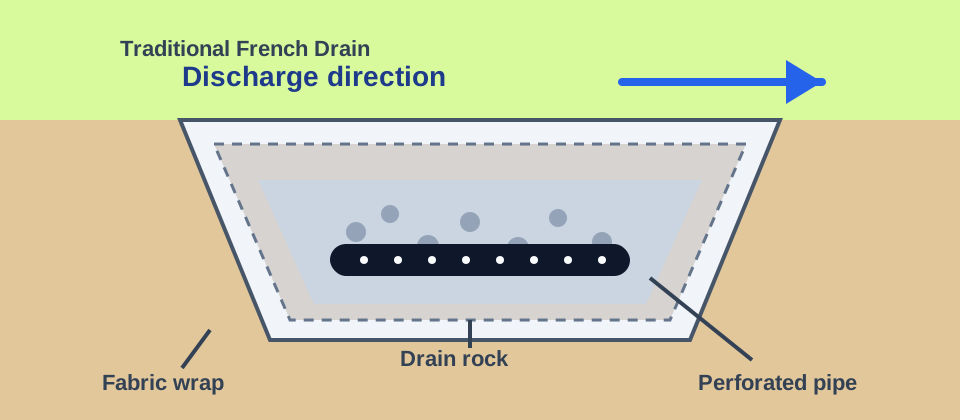
Traditional mode shows the fabric wrap, drain rock, and perforated pipe the calculator is sizing.
Choose the Right Drain System Before You Shop
A French drain is not just a gravel trench. It is a system made of excavation space, filter fabric, drainage rock or a bundle, perforated pipe, and a discharge point. The fastest way to under-order is to skip one of those layers.
Traditional installs use loose clean stone plus separate pipe and fabric. Gravel-free systems replace most of that loose fill with prefabricated bundle sections. Both need the trench route, slope, and outlet to work.
Preset Guide
Use a preset when you want a quick, research-backed starting point instead of hand-entering every trench assumption.
- 1 Yard pooling: 12-inch trench width, 18-inch trench depth, 4-inch pipe, 2-inch top cover, 1% slope, 5% waste.
- 2 Foundation edge: same width but a deeper 24-inch trench and 10% waste so longer, fussier runs do not under-order fabric or rock.
- 3 Gravel-free bundle: keeps the same 12 x 18 starting trench but swaps the rock-and-pipe shopping list for prefabricated bundle counts.
Slope and Discharge Decide Whether the Drain Can Work
Check the outlet before buying materials. The shopping list matters only if the drain has somewhere legal and practical to discharge, such as daylight, a dry well, or an approved storm connection.
Keep an eye on low-slope runs. The calculator warns below 1% because shallow routes are hard to excavate consistently, especially near foundations or fences.
Foundation-side work deserves extra caution. If the trench touches a footing, waterproofing layer, or existing weeping tile, treat the calculator as a material estimate and confirm the detail before digging.
How the French Drain Math Works
Excavation volume uses the full trench: length x width x depth. That tells you how much soil is coming out before you ever get to rock or bundles.
Drain rock volume uses the trench width and the rock-filled depth, then subtracts the actual pipe cylinder volume. That subtraction is small on short runs and very visible on long runs or larger pipe sizes.
Fabric width is not just trench width. You need enough material to line the trench walls, come back up both sides, and still overlap at the top. The formula here is trench width + 2 x trench depth + 20 inches of overlap.
Slope drop is length x slope percentage. A 40-foot run at 1% needs 0.4 feet of fall, which is 4.8 inches.
Bundle mode still uses the same route length and slope logic, but the shopping math becomes bundle counts instead of loose rock and separate pipe.
Worked Example: 30-Foot Yard Drain
A homeowner is draining a soggy low spot with a <strong>30-foot traditional French drain</strong> using a 12 x 18 inch trench and 4-inch perforated pipe.
- 1 Run length: 30 ft, trench size: 12 in wide x 18 in deep, top cover: 2 in.
- 2 Excavation: 30 x (12/12) x (18/12) = 45 cu ft = 1.7 cu yd of trench.
- 3 Pipe displacement: π x (4/12/2)² x 30 = 2.6 cu ft removed from the rock estimate.
- 4 Rock fill depth: 18 in - 2 in cover = 16 in of rock around the pipe.
- 5 Rock with 5% waste: 1.5 cu yd (about 2.0 tons or 79 half-cu-ft bags).
- 6 Slope drop at 1%: 30 x 0.01 = 0.3 ft = 3.6 in.
A <strong>60-foot foundation-side run</strong> that needs a deeper trench and more waste allowance because the route is fussier and the outlet matters more.
- 1 Run length: 60 ft, trench size: 12 in wide x 24 in deep, top cover: 2 in, waste: 10%.
- 2 Excavation: 60 x 1 x 2 = 120 cu ft = 4.4 cu yd.
- 3 Required fabric width: 12 + (2 x 24) + 20 overlap = 80 in, so a standard 6-ft roll is still undersized.
- 4 Rock with pipe subtraction and 10% waste lands at roughly 4.2 cu yd or 5.6 tons.
- 5 Slope drop at 1%: 60 x 0.01 = 0.6 ft = 7.2 in.
A <strong>40-foot gravel-free bundle run</strong> where the installer wants prefabricated sections instead of separate rock and pipe.
- 1 Run length: 40 ft in gravel-free bundle mode.
- 2 Primary bundle math: ceil(40 / 10) = 4 ten-foot bundles.
- 3 Alternate supplier math: ceil(40 / 5) = 8 five-foot bundles.
- 4 Slope drop at 1%: 4.8 inches, same geometry rule as a traditional trench.
- 5 Traditional-equivalent outputs stay available if you want to compare bundle pricing against loose rock + pipe + fabric.
What This Calculator Shows Without JavaScript
Even before the interactive calculator hydrates, this page explains the three presets, the slope rule of thumb, the pipe-subtraction method for rock, and the fabric-wrap-width formula. That keeps the core calculation logic crawlable and readable in plain HTML.
If you only need the formulas: excavation = length x width x depth; slope drop = length x slope%; rock volume = length x width x rock-filled depth minus pipe cylinder volume; fabric width = trench width + 2 x trench depth + overlap.
Sources and Guidance Used for Defaults
Frequently Asked Questions
What slope should a French drain have? +
Do I really need filter fabric if I use socked pipe? +
Should the holes in the perforated pipe face up or down? +
When is bulk stone smarter than bags? +
Can I use pea gravel for a French drain? +
You May Also Need
Runoff Catchment Calculator
Back up to the runoff diagnosis step when the wet area may actually be driven by roof or hardscape collection.
Calculate →Catch Basin & Downspout Calculator
Use a basin / solid-pipe branch when roof leaders or concentrated inlets should not be forced into French-drain math.
Calculate →Channel Drain Calculator
Switch to a surface-intercept branch when patios, thresholds, or hardscape edges need channel sections instead of trench rock.
Calculate →Topsoil Calculator
Estimate the soil you need to re-cover the trench after the drain is installed.
Calculate →